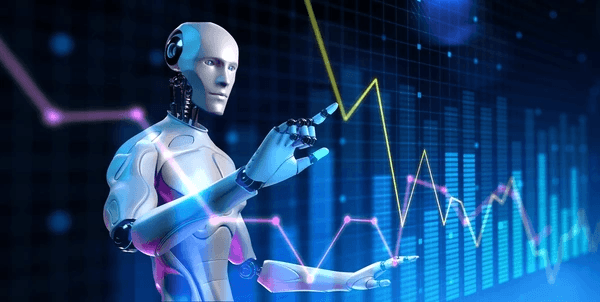
Artificial intelligence is changing how people interact with money. A new generation of intelligent trading applications is attracting global attention, but what lies behind this rapidly expanding financial technology trend?
The world of investing is undergoing a technological transformation.
As artificial intelligence becomes more sophisticated, financial technology companies are exploring new ways to make market research, portfolio monitoring and trading automation accessible to a wider audience.
At the center of this development are AI trading apps, digital platforms that combine advanced algorithms with financial data to support investment-related activities.
These tools are no longer limited to traditional financial institutions. Increasingly, consumers can access AI-powered research and analytical functions directly from their smartphones.
But one important question remains:
Could artificial intelligence fundamentally change the way people manage investments, or are the expectations surrounding these technologies becoming too ambitious?
The Beginning of a New Financial Technology Era
For decades, financial markets have relied on technology.
Professional traders have used sophisticated algorithms, electronic trading systems and quantitative models to analyze information and execute transactions.
What is changing today is the accessibility of certain analytical capabilities.
Modern applications can process large volumes of information, monitor market developments and provide explanations through intuitive interfaces.
Artificial intelligence adds the ability to recognize statistical relationships and summarize complex financial documents.
Some applications also offer automated trading functions based on predefined rules.
These developments have generated interest among investors seeking more efficient ways to understand financial markets.
However, technological sophistication does not automatically translate into financial success.
How AI Trading Apps Analyze Global Markets
Financial markets are influenced by a wide variety of factors.
Company earnings, central-bank decisions, interest rates, inflation and international events can all affect asset prices.
AI-powered systems may analyze selected data sources to identify historical patterns or unusual market activity.
Machine-learning models can examine relationships within financial information, while natural-language processing tools can summarize reports and news.
For example, an AI research application might compare financial indicators across companies or explain recent changes in market volatility.
These functions may help users organize information faster.
But financial markets remain unpredictable, and historical relationships do not always continue into the future.
Why Automated Investing Is Becoming More Popular
The growing popularity of AI-based financial applications reflects several broader trends.
First, consumers have become more comfortable using mobile technology for banking, budgeting and investing.
Second, artificial intelligence is increasingly integrated into everyday software.
Third, cloud computing has made advanced analytical systems easier for technology companies to develop and distribute.
Together, these developments are encouraging financial service providers to create more sophisticated digital products.
Some applications emphasize education and research.
Others offer portfolio monitoring, automated alerts or algorithmic trading capabilities.
Users should understand which services are being provided before choosing a platform.
Can AI Trading Reduce Human Error?
Human emotions can influence investment decisions.
Fear, excitement and excessive confidence may lead individuals to act impulsively.
Automated systems can apply predefined rules consistently.
This may help users avoid certain emotional decisions.
However, algorithms can make errors of their own.
A poorly designed model may rely on inaccurate data, overestimate historical patterns or react unexpectedly to changing market conditions.
Technical failures and transaction costs can also affect investment results.
Removing emotion from a decision-making process does not eliminate financial risk.
The Growing Role of AI Financial Assistants
One emerging development involves conversational AI systems designed to explain financial information.
Instead of interpreting complicated charts independently, users may be able to ask questions in everyday language.
An AI assistant could summarize a company's earnings report, explain the meaning of market volatility or describe how diversification works.
Some tools may also help users explore hypothetical investment scenarios.
These capabilities could improve financial literacy and make financial information easier to understand.
However, AI-generated explanations can contain inaccuracies.
Users should verify important financial details and recognize that general information is not the same as personalized advice from a qualified professional.
The Difference Between Analysis and Automated Trading
Not every AI trading app automatically buys or sells assets.
Some platforms focus primarily on research.
Others provide algorithmic execution through authorized brokerage services.
A separate category includes automated investment management tools that may operate under specific regulatory requirements.
These differences matter.
An educational application that explains market trends does not necessarily require the same permissions as a service managing customer investments.
Before depositing money or connecting an account, consumers should determine exactly what a platform does and which company is responsible for providing the service.
Why Regulation Matters More Than Ever
As artificial intelligence becomes more common in financial services, regulators are paying increasing attention to transparency, accountability and consumer protection.
A legitimate investment platform should provide clear information about its operator, fees, risks and applicable authorization.
Consumers should independently verify regulatory claims through official financial authorities.
They should also be cautious about advertisements promising guaranteed returns, risk-free trading or exclusive access to secret financial technology.
Fraudulent operators sometimes misuse the names and images of famous businesspeople or public institutions to make investment offers appear credible.
Artificial intelligence is a technology, not evidence that an investment opportunity is trustworthy.
What Are the Biggest Risks of AI Trading?
Several risks deserve particular attention.
Market volatility: Financial asset prices can change rapidly and unexpectedly.
Algorithmic errors: Automated systems may make incorrect assessments or execute unsuitable transactions.
Overfitting: Strategies that appear successful in historical testing may fail in live markets.
Security vulnerabilities: Applications connected to financial accounts require strong data protection and access controls.
Misleading performance claims: Promotional results may not reflect actual trading performance.
Fees and commissions: Trading costs can significantly affect overall returns.
No AI trading system can guarantee profits or prevent investment losses.
Understanding these limitations is essential before using automated financial tools.
Could AI Trading Become Part of Everyday Personal Finance?
The influence of artificial intelligence may extend beyond active trading.
AI-powered tools could help users organize financial information, compare investment products and understand long-term savings strategies.
Automated systems may assist with portfolio monitoring and financial education.
For financial institutions, artificial intelligence may support fraud detection, compliance monitoring and operational efficiency.
These developments could make certain financial services more accessible.
However, the most valuable applications may be those that improve understanding rather than encourage unnecessary speculation.
What Could Change in 2027?
The next generation of AI-powered financial applications may introduce more advanced conversational interfaces and improved analytical tools.
Users may receive clearer explanations of portfolio risks and market developments.
Financial institutions could expand their use of specialized AI models for research and automation.
At the same time, cybersecurity, transparency and regulatory compliance will remain critical.
The companies that succeed over the long term will need to demonstrate that their technologies offer measurable benefits while protecting users.
Innovation alone will not be enough.
Conclusion: The Future of Finance Is Becoming More Intelligent
AI trading apps represent an important development in modern financial technology.
They are making advanced analytical tools more accessible and creating new possibilities for automated monitoring and investment research.
Yet financial markets remain complex, uncertain and influenced by events that algorithms cannot reliably predict.
The excitement surrounding artificial intelligence should therefore be balanced with realistic expectations.
The future of AI trading may not be about replacing human judgment with machines, but about giving people better tools to understand financial markets and make more informed decisions.
As the technology continues to evolve, transparency, security and responsible financial practices will determine its lasting value.
Disclaimer: This article is for informational purposes only and does not constitute financial advice. Trading and investing involve financial risks, including the potential loss of invested capital. AI-powered systems cannot guarantee returns.